
The layer underneath the others
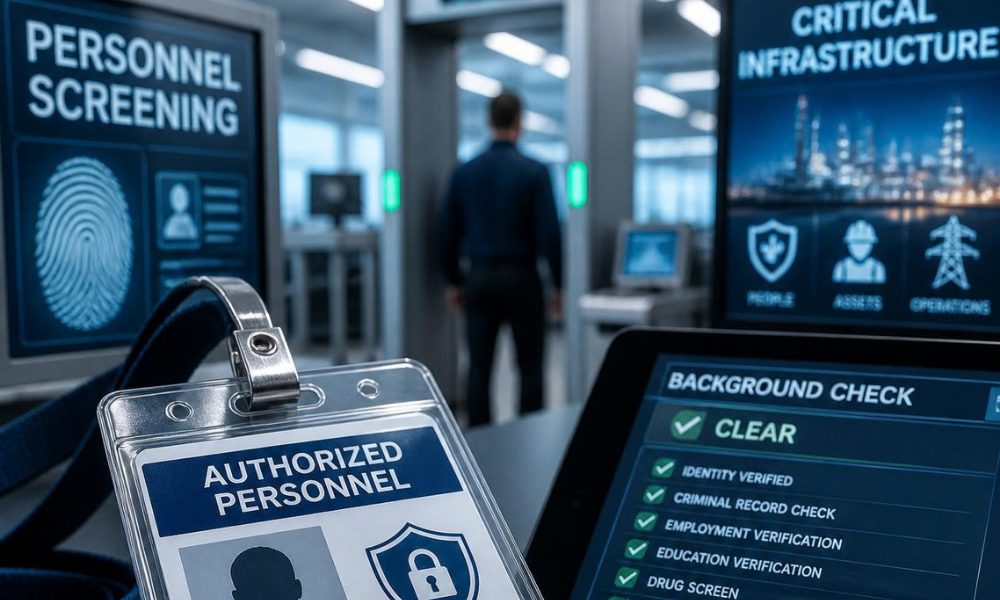
Ballistic materials. Access control. Standoff distance. Fire response. Continuity planning. These are the layers most owners think of first when they harden a substation, a BESS site, or a mission-critical facility. But the people who hold badges, credentials, and system access are also part of that perimeter — and they are a layer that is frequently underweighted.
A dependable, compliant background screening process is not an HR formality. For critical infrastructure operators it is a personnel-risk control with the same logic behind it as fencing or CIP-014 compliance: identify the threat, assess the consequence, and close the gap before it becomes expensive.
Many operators turn to third-party background screening firms to build and run this layer. Vetting a workforce that touches energy, grid, defense, or industrial assets is more complex than standard hiring screening, and it is best handled by firms with dedicated expertise in it.
What is a background check?
A background check reviews a candidate's financial, employment, criminal, commercial, and educational history to verify what they have represented about themselves. For roles with access to critical systems or sensitive sites, this typically extends to credit history, driving records, property ownership, drug test results, military records, and full work history.
A candidate can fail a background check for reasons that matter well beyond a résumé: falsified credentials, a failed drug test, adverse credit history, or discrepancies in education and references. Any one of these is a data point in assessing whether a person should hold access to a critical asset.
What screening does for infrastructure operators
For a critical infrastructure environment, screening does three things at once:
- Confirms qualification. It verifies that the person applying for an access-sensitive role is who and what they claim to be.
- Reduces insider risk. It is a direct control against placing someone with a disqualifying history in a position with physical or system access to a critical asset — the same logic that drives site hardening, applied to personnel instead of perimeter.
- Supports workforce stability. Better-screened hires tend to be better-fit hires, which lowers turnover in roles where continuity and institutional knowledge matter for mission-critical operations.
None of this replaces the physical and technical layers of a protection plan. It is the layer that sits underneath them. Screening does not predict conduct and does not guarantee safety; it gives the organization a stronger factual basis for the access decisions it already makes.
Why outsource this layer
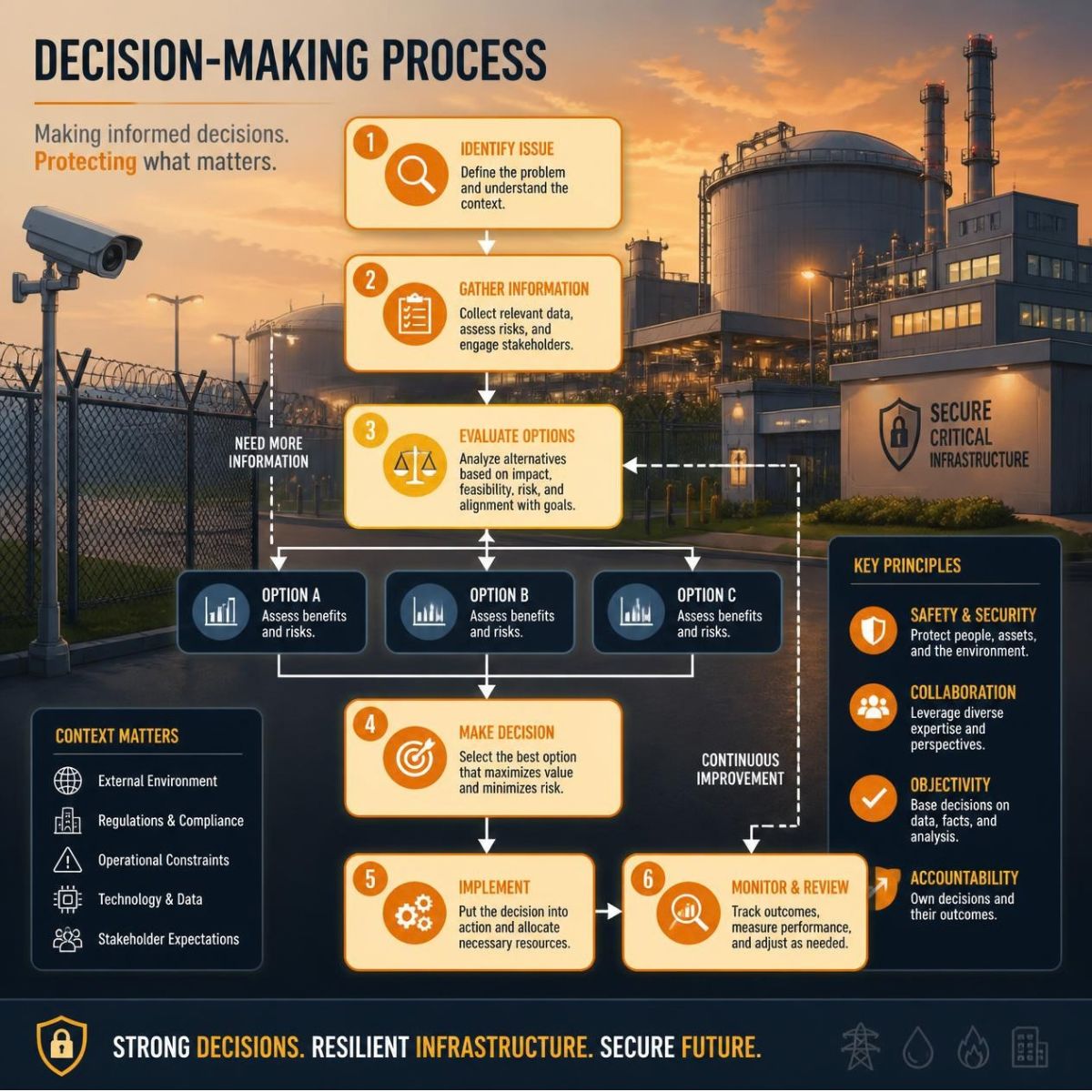
Specialized screening firms bring experience and infrastructure that most internal HR teams are not built to replicate at scale. That translates into two concrete advantages for asset owners.
Efficiency. An established third-party process is faster and more consistent than building one in-house, freeing internal teams to focus on operational risk rather than screening logistics.
Compliance. A qualified partner builds a process aligned to industry standards and to state and federal regulatory requirements — reducing exposure to fines and litigation, and giving compliance teams a defensible, documented process to point to during audits or after an incident.
Choosing a screening partner for a critical infrastructure environment
The bar for a screening vendor should be higher than it would be for a typical commercial hire. Look for:
- A verifiable track record. A professional reputation and references from clients with comparable operational risk profiles — not just general HR clients.
- Secure data handling. Candidate records tied to access-sensitive roles are themselves an asset worth protecting. The vendor's data storage and security practices should meet the same scrutiny you would apply to any system touching critical infrastructure data.
- Global reach. Multi-site and multinational operators need a partner that can screen consistently across jurisdictions and stay current on local data privacy and employment law — a compliance layer with its own cross-border complexity.
One option: Global Verification Network
Global Verification Network (GVN) is a consumer reporting agency that builds screening programs for organizations where a poor hiring decision is not just a staffing problem — it is a risk to the asset and the mission. GVN states that every member of its team is certified in Fair Credit Reporting Act (FCRA) standards and that its senior leaders hold FCRA Advanced Certification.
GVN scopes checks to the role and the access being granted rather than to a fixed checklist, with the accuracy and compliance rigor that access-sensitive environments require. Its services are described on the Amidon Shield background investigations page.
Disclosure. Global Verification Network and Amidon are both affiliated with Preservation 2, and GVN’s screening services are offered through Amidon. Read this section with that in mind. About and disclosure.
To talk through building personnel screening into a protection strategy, request an assessment.