Infrastructure resilience articles.
Visual, practical analysis for owners, developers, agencies, engineers, and security teams responsible for facilities that have to keep working.
BESS Sites Need More Than a Fence Line
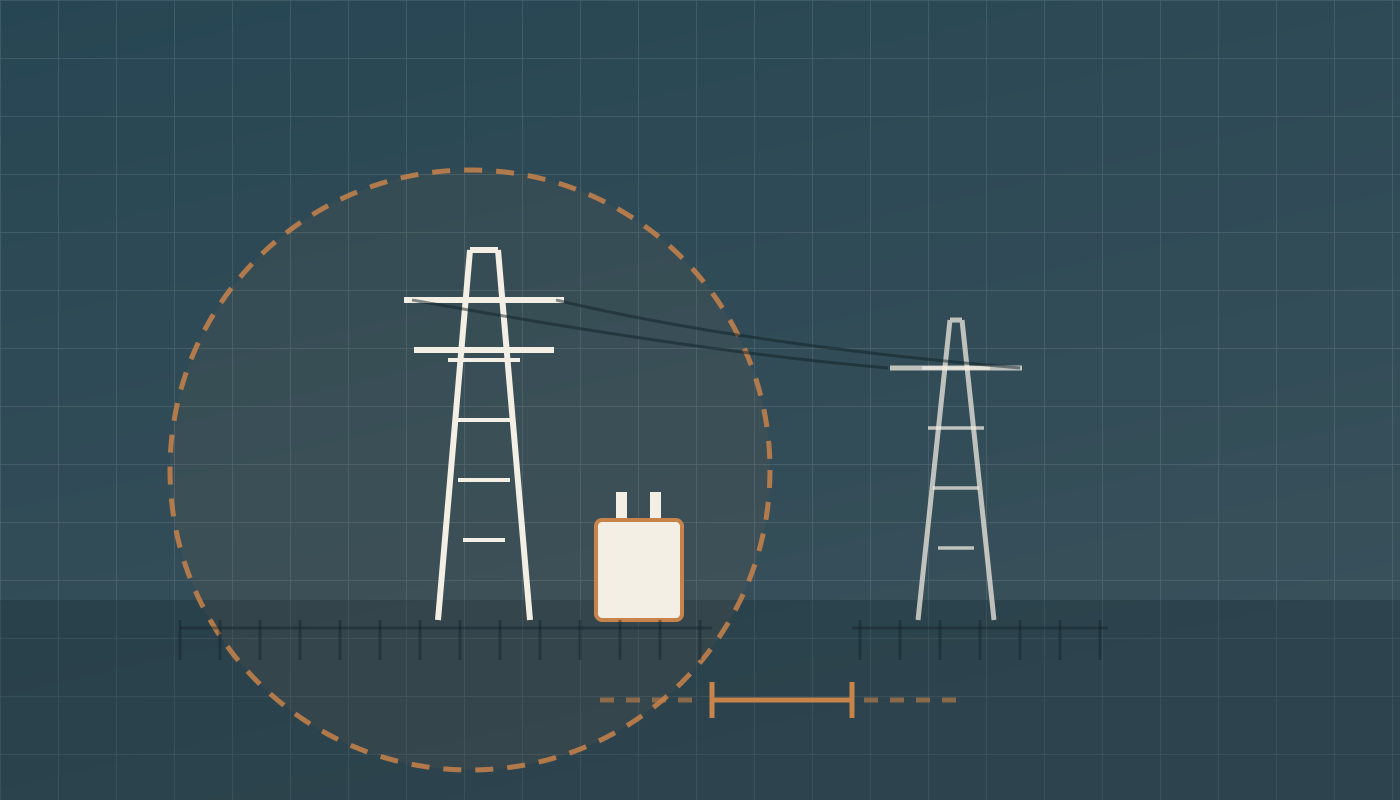
Battery energy storage projects are infrastructure assets. Site security should account for thermal exposure, responder access, standoff, ballistic risk, and cascading-loss scenarios.
NERC CIP-014 Turns Physical Security Into an Executive Risk Question
CIP-014 is not a product checklist. It forces owners to identify critical stations and substations, assess threats, and implement physical-security plans appropriate to system impact.
The Retrofit Decision: Preserve, Harden, or Replace?
Modern preservation compares mission risk, downtime, construction cost, embodied carbon, and procurement constraints before deciding whether to preserve, harden, or replace an asset.
Critical Facilities Need Layered Protection, Not Single-Point Solutions
Ballistic materials, access control, standoff, fire response, screening, and continuity planning only work when they are engineered as a system.
Why Battery Storage Projects Need Consequence-Based Perimeter Design
BESS perimeter design should be based on the consequence of asset loss, not only on fencing norms, local aesthetics, or minimum site-security specifications.
The New Preservation Question for Substations
Substation preservation is no longer limited to maintenance and replacement cycles. Owners need to ask whether the asset can survive credible disruption and maintain system function.
Public Buildings Need Retrofit Pathways, Not Only Capital Projects
Municipalities and agencies often need practical hardening pathways that fit capital constraints, procurement timing, and occupied-building limitations.
Facility Hardening Starts With Mission Consequence
Hardening decisions improve when teams classify what happens if the facility, room, envelope, or utility connection is lost.
Data Centers Are Physical Infrastructure Before They Are Digital Infrastructure
Data center resilience depends on physical envelopes, energy continuity, access control, cooling infrastructure, and protection of critical support systems.
The Practical Case for Hardened Utility Enclosures
Critical utility equipment often sits in exposed locations where conventional enclosures provide weather protection but limited security value.
Range Infrastructure Preservation Is a Readiness Issue
Military and law-enforcement training infrastructure has to preserve realism, safety, uptime, and flexibility under heavy use.
Hardening Does Not Have to Mean Slowing a Project Down
When hardening is integrated early, protective materials and design choices can reduce rework and fit normal construction sequencing.
Fire, Ballistic, and Forced-Entry Risk Should Not Be Designed in Separate Rooms
Owners often evaluate fire, ballistic exposure, forced entry, and operations separately. Critical facilities need these questions integrated before design choices harden.
Low-Carbon Durability Is a Preservation Strategy
The lowest-risk carbon strategy is often extending the useful life of assets already in service while improving their resilience.
The Owner’s Checklist for Threat-Informed Retrofit Planning
A disciplined retrofit planning checklist helps owners move from broad concern to a scope that can be engineered, priced, and procured.
Why Critical Infrastructure Content Should Be Evidence-Led
Owners and partners need clear, evidence-led content that explains why infrastructure protection decisions matter without overstating certainty.
From Maintenance Budget to Resilience Investment
Critical facilities often bury resilience needs inside maintenance budgets. Preservation 2 reframes those needs as risk-reduction investments.
The Case for Regional Producer Networks in Resilient Construction
Regional production capacity can reduce logistics risk, improve response speed, and make specialized construction systems more practical for public and private owners.
Preserving Operational Continuity During Facility Upgrades
Hardening projects are more valuable when they preserve operations during the upgrade instead of forcing long closures or disruptive sequencing.